

Why is it important?
Aquaculture is an important part of the Scottish economy, particularly in the more rural communities of the west coast, western and northern isles. In 2017, aquaculture generated £354 million in Gross Value Added (see Aquaculture assessment). Although warmer waters will mean faster production rates, there will also possibly be more challenges for the industry due to diseases, parasites, harmful algal blooms (HABs), ocean acidification and sea-level rise.
What is already happening?
Currently, no clear impacts due to climate change have been established for aquaculture of finfish or shellfish (Collins et al., 2020). A recent study by Moriarty et al. (2020) linked losses in Scottish farmed salmon production to winter minimum air temperature and biomass. Milder winters and increased biomass are predicted to increase mortality, which the aquaculture sector would need to manage. Emerging gill diseases in farmed finfish and the establishment of Pacific oysters (Crassostrea gigas) in the natural environment have both been linked to warming temperatures (Collins et al., 2020).
What is likely to happen in future?
Under future climate change scenarios, the aquaculture industry will face a number of challenges. A major concern is increased occurrence of pathogens and parasites (such as sea lice and gill disease), particularly when animals are subject to a combination of stresses (temperature, ocean acidification, lower dissolved oxygen; Collins et al., 2020). The full impacts of these changes under future climate scenarios has not fully been established. Research of US shellfish aquaculture (Ekstrom et al., 2015) has shown ocean acidification to affect shellfish aquaculture and the coastal communities that rely on this sector.
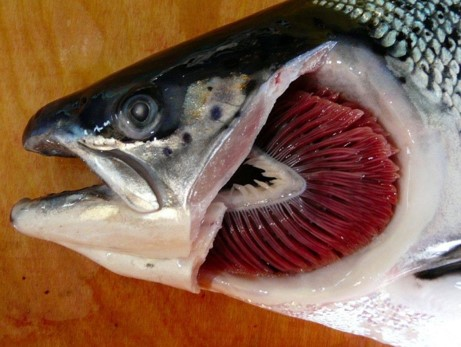

Figure 1: The impact of gill disease has been linked to warmer water temperatures. The difference between normal (left picture) and abnormal (right picture) gills are clearly apparent.
Bacterial diseases (such as those caused by vibrios) are predicted to become more prevalent and severe as water temperatures rise (Collins et al., 2020; Thomson et al., 2006). Similarly, the impact of Amoebic Gill Disease and other gill diseases (Figure 1) has been linked to water temperatures, with warmer temperatures having a negative impact (Benedicenti et al., 2019; Collins et al., 2020).
Extreme weather events and sea-level rise may also have an impact on the industry’s productivity. However, the aquaculture industry may be able to mitigate for some of these impacts through adaptation of new farm management practices, technologies and treatments (Collins et al., 2020).
The impact of human-induced climate change will not only be far reaching in the marine ecosystem (see Biological impacts of climate change), there will also be impacts on the marine economy. While many of these impacts will be negative, there will also be some opportunities to develop the blue economy, through its potential role in mitigating for climate change (see Opportunities for climate change mitigation) and through changes within sectors (for example, new commercial fish species).
Please see the relevant sections below, for further details on three major sectors: Aquaculture, Fishing and Coastal infrastructure, ports and shipping.


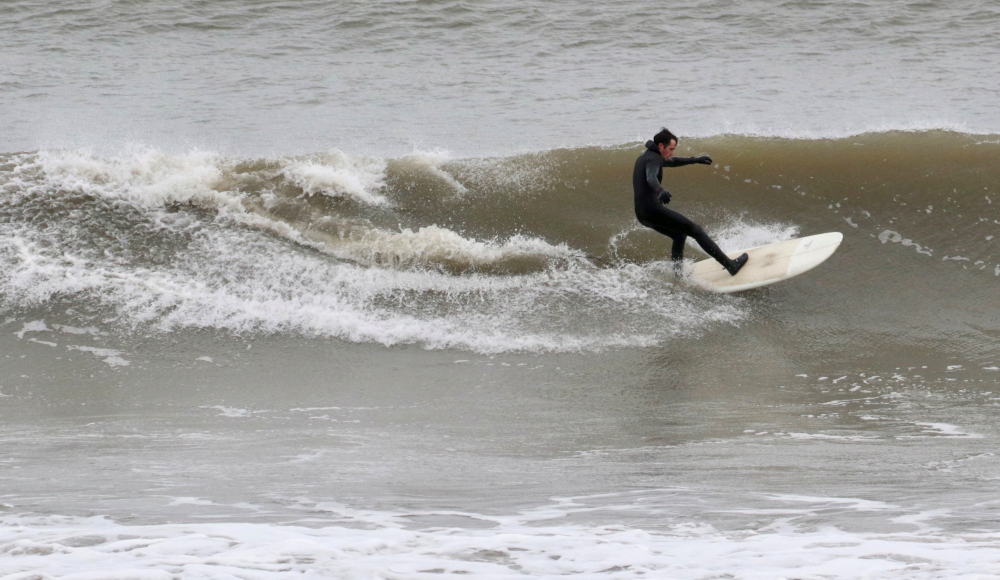
In addition to these, the tourism and recreation sectors will also be impacted by climate change (Coles, 2020). Coastal resorts and nature parks, like all coastal regions, could be subject to increased risk of sea level rise, coastal flooding, erosion and extreme weather. The magnitude of these impacts still remain uncertain. Climate change may also increase opportunities for the sector with warmer air and sea temperatures making seaside visits more attractive and possibly extending the peak season either side of the current peak (Coles, 2020).
In general, the impacts of climate change will differ by sector, and adaptation to climate change and the opportunities that may emerge will also differ. Recent work by Cunningham (2019) highlighted that the priorities and place-based issues in small island communities around Scotland required a combination of community-based action and strategic policy.


Links and resources
|
, 2019. Effects of temperature on amoebic gill disease development: Does it play a role?. Journal of Fish Diseases, 42(9), pp.1241 - 1258. Available at: https://onlinelibrary.wiley.com/doi/abs/10.1111/jfd.13047. |
|
, 2020. Impacts of climate change on aquaculture. In MCCIP science review 2020. MCCIP science review 2020. Lowestoft: Marine Climate Change Impacts Partnership, pp. 482–520. Available at: http://nora.nerc.ac.uk/id/eprint/527054/. |
|
, 2015. Vulnerability and adaptation of US shellfisheries to ocean acidification. Nature Climate Change, 5(3), pp.207 - 214. Available at: https://www.nature.com/articles/nclimate2508. |
|
, 2020. Modelling temperature and fish biomass data to predict annual Scottish farmed salmon, Salmo salar L., losses: Development of an early warning tool. Preventive Veterinary Medicine, 178. Available at: https://www.sciencedirect.com/science/article/pii/S0167587719308530. |
|
, 2006. The biology of vibrios, |